
A Seam across the Stair Rail
Anomaly Reports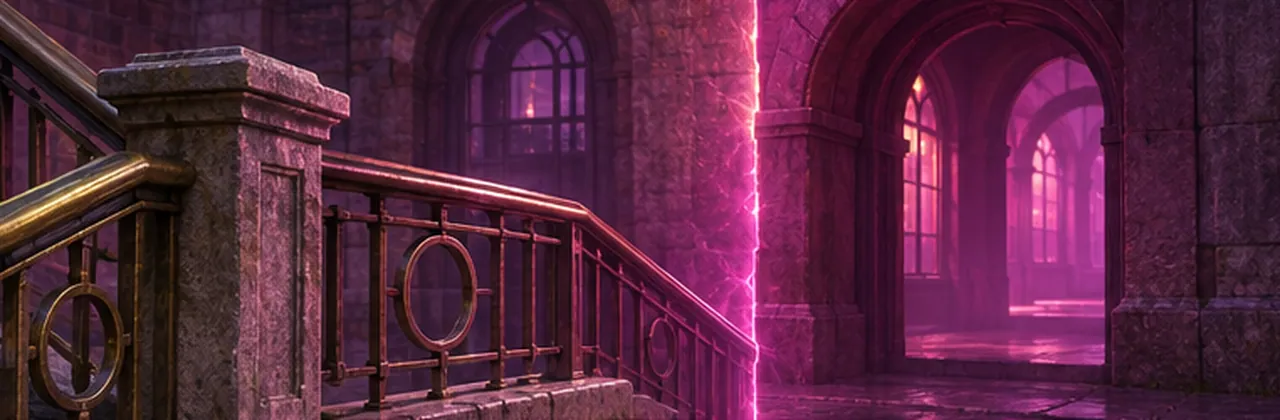
Find the end of one old rail
The prototype stairs climb toward a landing that crosses the tear. One curved rail stops where it meets a solid block of stone. From the first flight below, another railing appears to continue it through the bright gap. The earliest version gave both rails the same background and hid the lower supporting post. Looking at the light across both did not establish whether the far rail came from another stairway at all.
Hold the lower support in view
We eased one part of the lighting so that a worn edge beside the post stays visible while the nearer part of the rail crosses the tear. From the lower flight, the dark support remains below the first rail. At the far side another rail extends through the gap and drops away. The bright opening now leaves a thin strip of the worn edge beside it. That connection grounds the first shape before the other one becomes visible.
Follow the next section at a different height
An earlier camera walked directly toward the bright line and placed both ends near the middle of the picture. The new view begins at the lower post and aims a little higher. Once the shape of the first rail is clear, the second can appear behind it. After climbing two steps you can turn and see the ends from the side. The Duplicate Landing uses that lower view to identify the place where a piece belongs.
Read a small horizontal drift
The part of the rail that seems to match the original moves slightly when you look across the tear. A thin plank beneath the landing stays in place. Comparing the two gives the player a stable object to use while following the change. The Street Sign Falls out of Line describes a similar move farther out on the road. Its dark curb is wider than the plank and has a larger distance to cover before a person can see both sides.
Keep the part to carry in the earlier view
A small brass object can be taken from a visible space below the intact railing. The low support remains there when the object moves. You can look back through the tear and see which part has gone, which also helps place the other narrow opening above the step. The study keeps the object near the point where the framing of the scene begins to shift. It does not add a bright glow to a related object if that object belongs to the fixed stair.
Wait where the angle becomes visible again
After crossing, the near wall can hide the outer rail for a moment. A wider lower step keeps both places less than a turn away. Pause there and look back along the side of the stone until the first support becomes visible. The change following a short return gives a stronger sense of direction than continuing to climb with only one curved edge in the picture.
Confirm the seam even when empty
An inert tear without the object offers a useful check of the lower view. The two rails should still end in different places. If you can see both but cannot tell which is supported at that point, the base of the nearer post needs more contrast. Keep its worn edge away from the strongest green light. Keeping the underlying architecture legible helps the person understand the repair after the object has been inserted.
Return to the report that describes the location
Anomaly Reports uses the discontinuity in the rails as a reference alongside the street offset and other checks. The next version may put a taller platform on the opposite side. We can use the same shorter step to think about which parts of the original view still need to be seen before the crossing begins. The scene should preserve the short rail and its longer duplicate without making them feel like separate rooms.