
Carry Only One Weight
Anomaly Reports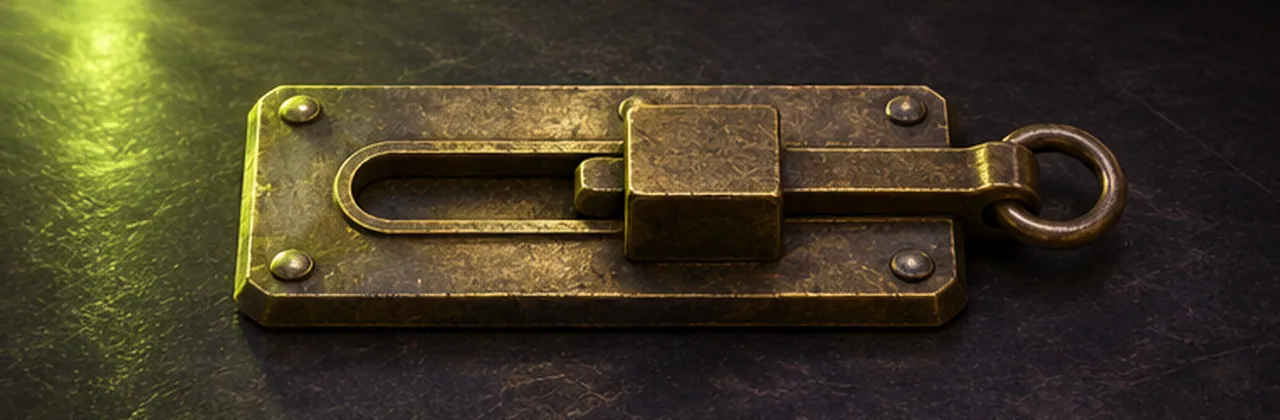
Start at the shutter with one brass piece
Finch Street has an old box under a wall lamp, with a rectangular weight inside. The weight looks dull at first. Its brighter bevel forms a narrow reflected shape along a wet edge of the box. The first trial used a larger reflection under it. Two similar shapes were visible at once, and either looked like an object the traveler could carry to the other side. A limit of one was hard to understand before choosing anything.
Keep the reflection anchored to a surface
We redrew the lower part of the box with a visible hinge and a dark ledge extending under the weight. The borrowed color shows only along the top of that ledge. It becomes visible a little later than the bright edge on the weight. From the lower camera a tiny gap remains below the actual object. Bringing those features into the same picture gives a useful way to identify which piece rises from the box.
Let the hand and box keep different traces
When the carrier picks up the weight, the underside of the opened box stays in place. Part of the reflection travels with the weight until it leaves the bright line. The dark frame on the box still looks the same. Looking back after crossing, the person can see the original box without the weight in it. The opening scene does not draw another object in the empty spot to suggest the earlier view.
Check one surface before looking at the opening
The other Finch Street presents a socket under the shutter. The top of the socket runs up to the new side of the curb. It matches the weight from only one approach at first. Rotate a little and look again to find a short corner that had been hidden. One Object Across Finch Street uses that check before the object is fitted. A player who recalls which corner caught the strongest light can compare the shape without drawing a second piece.
Preserve a clue in the street that does not travel
A small dent at the edge of the first shutter stays visible through the tear. It helps place the first side when the person sees the darker version of the wall. The Street Sign Falls out of Line looks at a larger difference that cannot be carried through. Keeping the dent smaller and closer to the box helps the player identify which parts of the earlier picture should be treated as fixed.
Imagine a replacement only after you test the first one
One draft put a nearly identical weight in another box on the far side. It offered a second apparent choice about what to carry back. That made it difficult to tell whether a later repair needed a weight or the specific object already picked up. The current test relies on the shape of one piece and its slot. If the traveler decides to remove it again, both the empty box and the newly exposed socket can still be recognized.
Give the reflection room to differ
We drew another close image in which the brighter edge sits completely inside the ledge. It still looks like a small object for a moment. Bring the light closer to the weight and the reflected shape stretches away while the real bevel keeps its angle. That change can be seen from the same position as the fitting, which gives a person another visual reason to use what they already carry.
Place the last visible view on the board
Anomaly Reports puts a short note beside the object count in the first Finch Street case. The transfer can be tested from its earlier and later sides without interrupting the run. The next version will move the brightest surface to the other side of the box and see whether the piece is still recognizable if the first clue appears against a different part of the street.