
One Object Across Finch Street
Return to the transfer timeline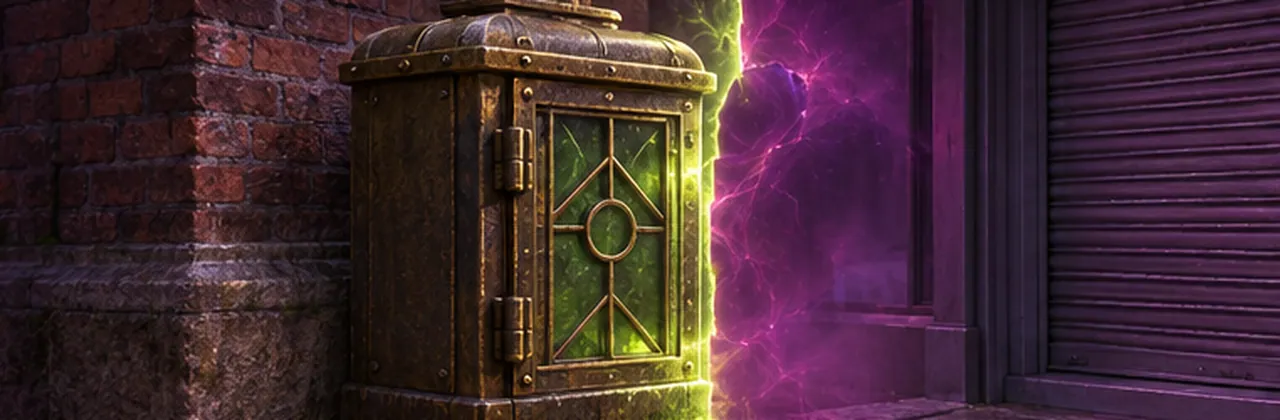
Stand below the closed arcade
The first view is a narrow street where an old lamp reaches the side of a closed shutter. A small brass box sits beside it. Through a place in the air where the pavement divides, you can see a second version of the doorway from a slightly different height. The carrier can reach into the box for one weighted piece before stepping toward the tear. Its dull shape looks like it could belong to several fittings on the opposite side.
Test which things stay with the street
The object in the carrier’s hand moves from one side to the other. The box remains where it was. Look back through the gap and use a scratch near the hinge to place the earlier view. It becomes possible to distinguish a narrow reflection of the object from something waiting to be collected on the new side. Carry Only One Weight records a version where two apparently solid objects once occupied the picture at the same time.
Match the hole to the piece
The wall on the other side has an opening below the shutter. A shallow slot beside it is easier to see up close. The top of the slot is rounded like a raised part of the weight, and its lower edge is slightly wider. Try looking at it from the side before placing the object. That view shows one corner hidden by the bright part of the tear. The player can take another look inside the brass box if the older edge seems different.
Recognize the original line of pavement
The first street has a wide curb that passes under the lamp. The other has a narrower edge that ends closer to the shutter. The Street Sign Falls out of Line shows why a second landmark can be useful when those lines seem to meet. Find the front edge of the shutter and move back to a place where both sides can be compared. The relation around those edges gives the slot a useful location after crossing again.
Test the change after fitting the weight
Placing the object opens a narrow view along the repaired curb. The street is still split farther above it and its buildings remain slightly different. You can put the weight back in your hand and compare the older opening before making a final choice. Once the close view is understood, step to the broad street and read where the larger pieces line up again. The closed form keeps a scrap of light just above the curb.
Draw the weight as a solid point
Violet light begins around the edges of the shutter and around a narrow crack above the stones. The weight has dull warm brown sides and one lighter bevel. Reflections can reach the bevel but leave the lower edge clear enough to carry through the dark. For a moment the same shape might appear to be present on either side. The position of the hand and the unchanged box let the player follow which one is real to the scene.
Prototype boundary
The original prototype explores one transfer in an invented street. We are testing if the same object can be identified when the first view and second view have different lighting. Transfer Timeline shows where the object was picked up and where it can be fitted. A bigger route could repeat the rule in another type of building. The initial question is whether one repair and one return are enough to make the split recognizable.